How Digital Marketing Turns Visitors Into Customers
Many business owners invest in a website, social media, SEO, or online advertising expecting immediate results. While these marketing efforts are important, customers rarely make a purchase the first time they discover your business.
Instead, they move through a journey.
They may first find your business through a Google search, read a blog article, watch a video, browse your social media, compare you to competitors, read reviews, and only then decide to contact you.
Understanding the customer journey helps you create marketing that meets people where they are, builds trust over time, and encourages long-term relationships—not just one-time sales.
At Team WTI, we help businesses create a digital marketing strategy that supports every stage of that journey.
What Is the Customer Journey?
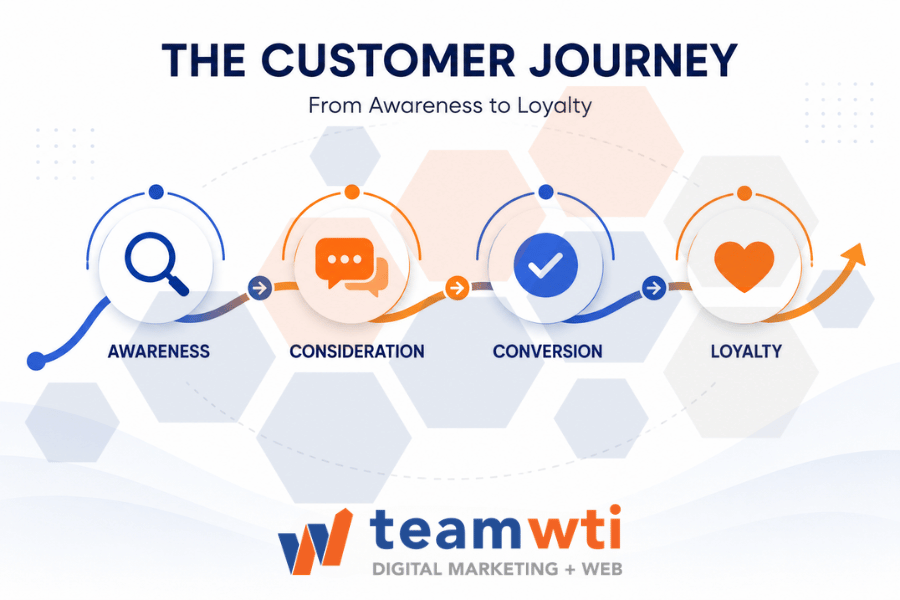
The customer journey is the path someone takes from first discovering your business to becoming a loyal customer.
Rather than viewing marketing as one isolated activity, the customer journey demonstrates how different marketing channels work together to guide customers through the decision-making process.
Most journeys include four primary stages:
- Awareness
- Consideration
- Conversion
- Loyalty
While every customer is different, understanding these stages helps businesses deliver the right message at the right time.
Stage 1: Awareness
Before someone can become your customer, they first need to discover your business.
Today’s customers find businesses in many different ways, including:
- Google Search
- AI-powered search experiences
- Google Business Profile
- Blog articles
- Videos
- Social media
- Paid advertising
- Word-of-mouth referrals
The goal during this stage isn’t necessarily to make a sale.
It’s to introduce your business, answer questions, and begin building trust.
Helpful educational content often performs better than sales-focused messaging because it demonstrates your expertise while helping potential customers solve real problems.
Stage 2: Consideration
Once someone knows your business exists, they begin comparing their options.
They may visit multiple websites, read reviews, compare services, and research potential providers before making a decision.
This is where valuable content becomes incredibly important.
Businesses can build confidence by providing:
- Detailed service pages
- Educational blog articles
- Frequently Asked Questions
- Customer testimonials
- Case studies
- Videos
- Helpful comparison guides
Rather than simply telling customers you’re the best choice, this stage gives you the opportunity to demonstrate your knowledge and experience.
Stage 3: Conversion
Eventually, visitors decide whether they’re ready to take action.
At this point, your website should make that decision as simple as possible.
Successful conversion often depends on factors like:
- Clear calls-to-action
- Easy-to-use contact forms
- Mobile-friendly design
- Fast-loading pages
- Strong user experience
- Trust signals such as reviews and testimonials
Small improvements to your website can significantly increase the number of visitors who become customers.
Stage 4: Loyalty
The customer journey doesn’t end after someone makes a purchase.
One satisfied customer can become a repeat customer, leave positive reviews, recommend your business to others, and continue engaging with your brand for years.
Businesses can strengthen customer loyalty through:
- Email newsletters
- Helpful follow-up content
- Social media engagement
- Exclusive offers
- Excellent customer service
- Ongoing communication
Retaining existing customers is often more cost-effective than constantly trying to acquire new ones.
The Customer Journey Isn’t Always Linear
While marketers often illustrate the customer journey as a funnel, today’s buyers rarely follow a perfectly straight path.
For example, someone might:
- Discover your website through Google.
- Read a blog article.
- Leave without contacting you.
- Watch one of your videos a week later.
- Visit your social media pages.
- Read online reviews.
- Return to your website several weeks later.
- Request a quote.
Every customer interacts with your business differently.
That’s why a successful digital marketing strategy supports every stage of the journey—not just the final conversion.
Every Marketing Channel Has a Purpose
Each marketing activity contributes to a different part of the customer journey.
| Marketing Activity | Customer Journey Stage | Primary Goal |
|---|---|---|
| SEO | Awareness | Help customers find your business in search results |
| GEO & AI Search Optimization | Awareness | Increase visibility in AI-generated search experiences |
| Google Business Profile | Awareness & Conversion | Improve local visibility and encourage calls or visits |
| Blog Content | Awareness & Consideration | Educate customers and build trust |
| Video Marketing | Awareness, Consideration & Loyalty | Explain services and increase engagement |
| Website User Experience | Consideration & Conversion | Make it easy for visitors to take action |
| Email Marketing | Loyalty | Build long-term customer relationships |
| Social Media | Awareness & Loyalty | Stay connected and encourage ongoing engagement |
When these channels work together, they create a stronger, more consistent experience for potential customers.
Why a Complete Digital Marketing Strategy Matters
No single marketing tactic works in isolation.
SEO helps customers find your website.
Content marketing answers their questions.
Video builds trust.
Your website encourages action.
Email and social media help maintain the relationship after the sale.
Each piece supports the next, creating a connected strategy that helps businesses grow over time.
Instead of focusing on one marketing channel, successful businesses invest in an integrated approach that supports customers throughout their entire journey.
Frequently Asked Questions
What is the customer journey?
The customer journey describes the process people go through from first discovering your business to becoming loyal customers.
Is the marketing funnel still relevant?
Yes, but today’s customer journey is often more flexible than a traditional funnel. People interact with businesses across multiple channels before making a decision.
Why don’t customers buy immediately?
Most purchasing decisions involve research, comparison, and trust-building. Helpful content and consistent marketing help move customers toward making a confident decision.
Which marketing channels are most important?
The best results usually come from combining multiple channels—including SEO, website optimization, content marketing, social media, email marketing, and AI search optimization—into one cohesive strategy.
How can small businesses improve their customer journey?
Creating helpful content, improving website usability, responding to customer questions, collecting reviews, and maintaining consistent communication all contribute to a stronger customer experience.
Build a Marketing Strategy That Supports Every Stage
Your customers don’t interact with your business in just one place. They discover your brand through search engines, websites, social media, videos, reviews, and recommendations before deciding to reach out.
By understanding the customer journey, you can create marketing that builds trust, answers questions, and encourages long-term relationships—not just one-time sales.
Whether you’re looking to improve your website, increase search visibility, strengthen your content strategy, or create a more connected digital marketing plan, Team WTI can help.
Contact Team WTI today to build a marketing strategy that supports your customers at every stage of their journey.