Why Topical Authority Matters More Than Keywords
Search engine optimization has changed dramatically over the past decade.
There was a time when ranking well simply meant placing the right keywords throughout a webpage. Businesses focused on exact-match phrases, keyword density, and repeating the same terms as often as possible.
Today’s search engines—and AI-powered search experiences—are much more sophisticated.
Instead of looking for individual keywords, Google and other search platforms evaluate how well your content covers an entire topic, answers related questions, and demonstrates real expertise.
This shift has made topical authority one of the most important components of modern SEO.
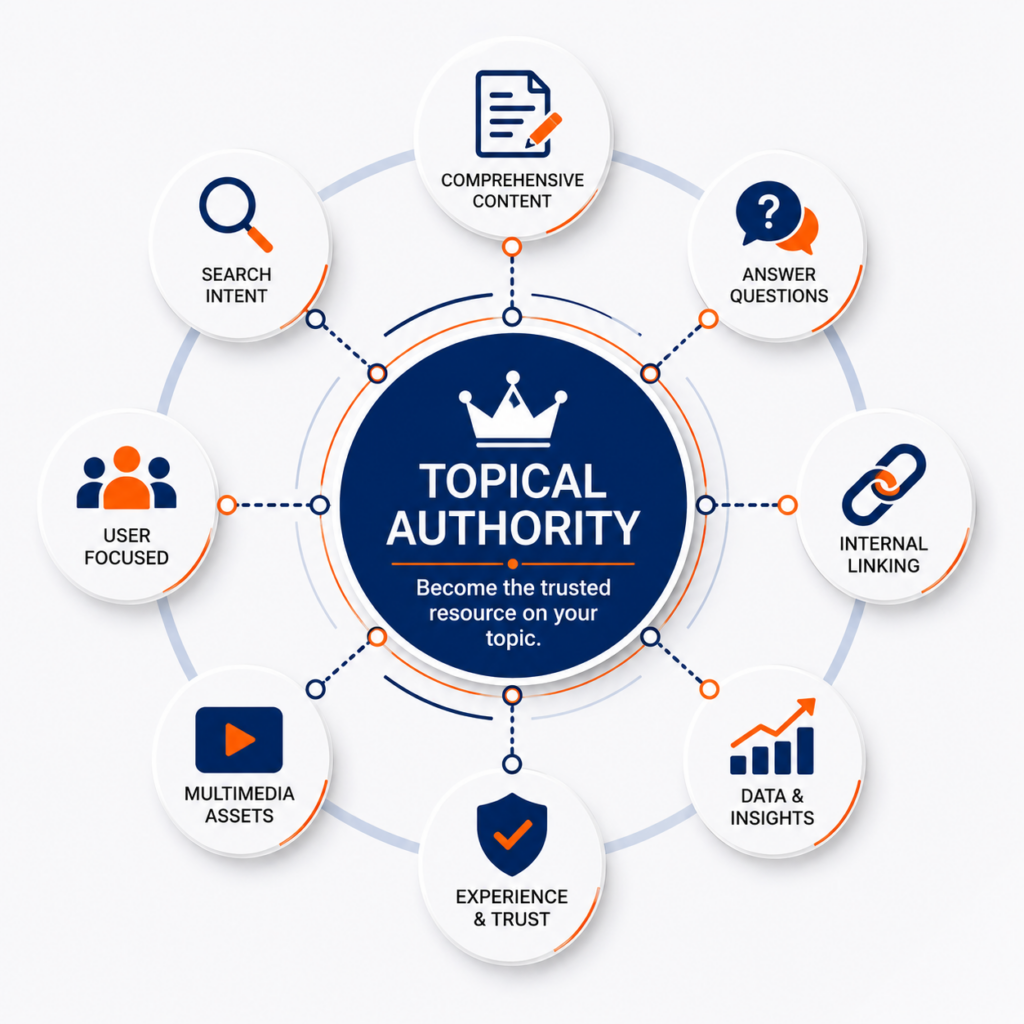
From Keywords to Context
Keywords still matter.
They help search engines understand what your content is about and remain an important part of SEO.
However, keywords are now only one piece of a much larger picture.
Modern search engines evaluate:
- Search intent
- Related topics
- User questions
- Content depth
- Internal linking
- Images and videos
- E-E-A-T (Experience, Expertise, Authoritativeness, and Trustworthiness)
- Overall topical coverage
Rather than asking,
“Did this page mention the keyword?”
Search engines are asking,
“Does this page thoroughly answer the user’s question?”
What Is Topical Authority?
Topical authority means becoming a trusted resource on a subject rather than simply ranking for a single keyword.
Instead of publishing one article about SEO, for example, you might create educational content covering:
- Search Engine Optimization (SEO)
- Answer Engine Optimization (AEO)
- Generative Engine Optimization (GEO)
- Content Strategy
- Business Blogging
- Video Marketing
- Local SEO
- Website User Experience
- Internal Linking
Together, these articles demonstrate expertise while helping both users and search engines understand that your website is knowledgeable about digital marketing as a whole.
Why Search Intent Matters
Every search begins with a question.
Sometimes people know exactly what they want.
Other times, they’re researching before making a decision.
Understanding why someone is searching is just as important as knowing what they searched for.
For example, someone searching for:
“SEO”
could actually be asking:
- What is SEO?
- Does SEO still work?
- How much does SEO cost?
- Does AI replace SEO?
- Is SEO different from GEO?
- How long does SEO take?
Creating content that answers these related questions provides significantly more value than simply defining SEO.
Where Do Content Ideas Come From?
One of the easiest ways to discover what your audience wants to know is by paying attention to the questions they already ask.
Excellent sources include:
- Google’s “People Also Ask” section
- Related Searches
- Google Autocomplete suggestions
- Customer emails
- Sales conversations
- Customer support questions
- Industry forums
- AI search conversations
These questions often become the foundation for helpful blog articles, FAQ sections, videos, and service page improvements.
Topical Authority Supports SEO and AI Search
Search engines aren’t the only systems evaluating your content.
AI-powered search experiences such as Google AI Overviews, ChatGPT, Bing Copilot, and other answer engines also look for comprehensive, trustworthy information.
Building topical authority helps support:
- Traditional SEO
- Featured snippets
- AI-generated search results
- Voice search
- Internal linking opportunities
- User engagement
- Long-term organic visibility
The goal is no longer to rank for one keyword.
The goal is to become the best resource on a topic.
Quality Content Builds Authority
Publishing dozens of short articles focused on individual keywords is no longer the most effective strategy.
Instead, businesses should create content that is:
- Helpful
- Accurate
- Well organized
- Easy to understand
- Supported by real experience
- Updated regularly
- Connected to related resources
When your content genuinely helps users, it naturally becomes more valuable to both traditional search engines and AI-powered search.
How Team WTI Builds Topical Authority
At Team WTI, we don’t simply optimize pages for individual keywords.
We build content ecosystems.
That means creating content that works together to answer customer questions, demonstrate expertise, and strengthen your website’s overall authority.
Our content strategies include:
- Keyword research
- Search intent analysis
- Content planning
- Internal linking
- FAQ development
- Image optimization
- Video integration
- GEO and AEO optimization
- Ongoing content updates
The result is content designed not only to rank—but to educate, engage, and support long-term business growth.e content that addresses the “why” behind keyword searches. Contact us today to learn more! Learn more about the services we provide, and our team by visiting our Facebook page.
| Then | Today |
| Keyword density | Search intent |
| Exact-match keywords | Topical authority |
| Individual pages | Connected content hubs |
| Ranking for one keyword | Answering complete topics |
| Search engines | Search engines + AI |
| Content written for algorithms | Content written for people first |
Frequently Asked Questions
Yes. Keywords remain an important starting point, but successful SEO also requires understanding search intent, topical authority, and user experience.
Topical authority is the process of demonstrating expertise across an entire subject through comprehensive, interconnected content instead of focusing on a single keyword.
Yes, but it’s now considered part of modern SEO rather than a separate strategy. Today’s SEO focuses on helping search engines understand topics, relationships, and user intent.
AI-powered search systems look for comprehensive, trustworthy resources. Websites with strong topical authority are more likely to be referenced because they thoroughly cover related topics and answer follow-up questions.
Create helpful content that answers customer questions, organize related articles into topic clusters, strengthen internal linking, update older content regularly, and demonstrate real experience throughout your website.
Build Authority, Not Just Rankings
Modern SEO isn’t about chasing individual keywords—it’s about becoming the trusted resource your customers are looking for.
By creating helpful, interconnected content that answers real questions, your website can build authority, improve visibility across both traditional and AI-powered search, and continue delivering value long after each article is published.
Whether you’re developing your first content strategy or expanding an established website, Team WTI can help you create content that strengthens your authority and supports long-term business growth.
Contact Team WTI today to learn how a strategic content plan can help your business grow online.