How to Measure and Improve Website Engagement
Driving visitors to your website is only the first step.
The real question is: What happens after they arrive?
Do visitors read your content, explore additional pages, watch your videos, or contact your business? Or do they leave after only a few seconds?
Understanding how people interact with your website helps you identify what’s working, discover opportunities for improvement, and create a better experience for future visitors.
Website engagement isn’t just about collecting data—it’s about using that data to make smarter marketing decisions.
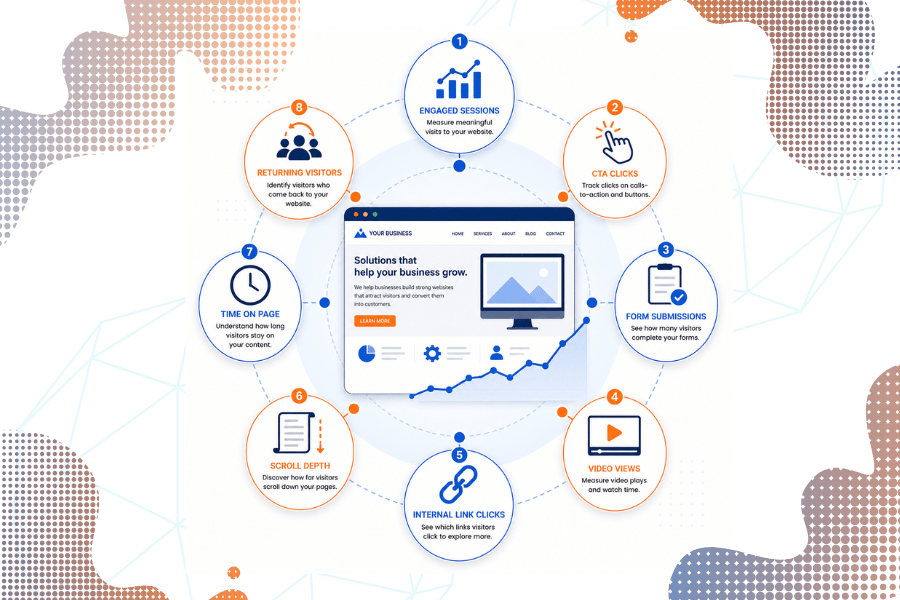
What Is Website Engagement?
Website engagement measures the meaningful ways visitors interact with your website.
Instead of simply counting page views, engagement focuses on the actions people take while they’re on your site.
Examples include:
- Reading blog articles
- Scrolling through a page
- Clicking internal links
- Watching videos
- Downloading resources
- Completing contact forms
- Calling your business
- Requesting a quote
- Visiting multiple pages
These interactions help you understand whether your content is providing value and guiding visitors toward becoming customers.
Why Website Engagement Matters
A website isn’t successful simply because people visit it.
Success comes from helping visitors find answers, build trust, and take the next step.
Strong website engagement can help you:
- Improve user experience (UX)
- Identify high-performing content
- Increase lead generation
- Strengthen conversion rates
- Support long-term SEO
- Better understand customer behavior
- Make informed marketing decisions
Rather than guessing what visitors want, engagement data allows you to improve your website based on real user behavior.
Which Website Metrics Should You Track?
Modern website analytics provide far more insight than simple page views.
Here are several engagement metrics worth monitoring.
Engaged Sessions
Google Analytics 4 introduced Engaged Sessions, which measure visits where users actively interact with your website rather than simply arriving and leaving.
This provides a more meaningful picture of how visitors use your website than pageviews alone.
Scroll Depth
Scroll depth measures how far visitors move through a page.
If most users stop reading after the first few paragraphs, your content or page layout may need improvement.
On the other hand, visitors who consistently reach the bottom of an article often indicate that the content is useful and engaging.
Time on Page
The amount of time visitors spend on a page can help determine whether your content is holding their attention.
While longer isn’t always better, pages that answer questions thoroughly often encourage visitors to stay longer and continue exploring your website.
Call-to-Action Clicks
Calls-to-action (CTAs) guide visitors toward the next step.
Tracking clicks on buttons such as:
- Contact Us
- Request a Quote
- Schedule a Consultation
- Learn More
helps determine whether your content encourages meaningful action.
Form Submissions
Contact forms, newsletter signups, downloads, and quote requests are excellent indicators that visitors are engaging with your website.
These actions often represent qualified leads rather than casual visitors.
Video Views
Video has become one of the most engaging forms of online content.
Tracking how often visitors watch your videos—and how long they continue watching—can provide valuable insight into which topics resonate most with your audience.
Internal Link Clicks
Visitors who continue exploring your website after reading one page often indicate strong engagement.
Internal linking helps users discover additional resources while strengthening your site’s overall organization and topical authority.
Returning Visitors
When people come back to your website, it’s often a sign that your content provides ongoing value.
Returning visitors frequently become some of your most engaged users and strongest future customers.
Traffic vs. Engagement
Many businesses focus entirely on increasing website traffic.
But traffic alone doesn’t guarantee results.
Would you rather have:
- 10,000 visitors who immediately leave your website?
or
- 500 visitors who explore multiple pages, contact your business, and become customers?
The goal isn’t simply attracting more visitors.
The goal is attracting the right visitors and providing an experience that encourages them to engage with your business.
How to Improve Website Engagement
Improving engagement doesn’t usually require dramatic changes.
Often, small improvements make the biggest difference.
Some proven ways to increase engagement include:
- Writing helpful, customer-focused content
- Improving page speed
- Creating clear navigation
- Adding comparison tables
- Expanding FAQ sections
- Incorporating images and video
- Strengthening internal linking
- Using clear calls-to-action
- Optimizing for mobile devices
- Answering real customer questions
Every improvement helps create a better experience for both users and search engines.
Engagement Supports SEO and AI Search
Search engines increasingly reward websites that provide valuable experiences for users.
While no single engagement metric directly determines rankings, improving engagement often goes hand in hand with creating helpful, high-quality content.
When visitors:
- Read your content
- Explore additional pages
- Watch videos
- Click internal links
- Return to your website
it’s often a sign that your content is meeting their needs.
These same qualities also support visibility in AI-powered search experiences by demonstrating expertise, organization, and usefulness.
Let Data Guide Your Decisions
Website analytics shouldn’t just generate reports—they should answer questions.
Questions like:
- Which pages generate the most leads?
- Where are visitors leaving?
- Which blogs keep people engaged?
- Which calls-to-action perform best?
- Which pages need improvement?
By regularly reviewing website engagement data, businesses can make informed decisions that continually improve their online presence.
Measuring Website Engagement
| Metric | What It Measures | Why It Matters |
|---|---|---|
| Engaged Sessions | Meaningful visits | Overall engagement |
| Scroll Depth | How much content users read | Content quality |
| Time on Page | Visitor interest | User engagement |
| CTA Clicks | User intent | Conversion opportunities |
| Form Submissions | Lead generation | Business growth |
| Video Views | Content engagement | Audience interest |
| Internal Link Clicks | Website exploration | UX & SEO |
| Returning Visitors | Customer loyalty | Long-term value |
Frequently Asked Questions
What is website engagement?
Website engagement measures how visitors interact with your website, including reading content, clicking links, watching videos, completing forms, and taking other meaningful actions.
Does website engagement affect SEO?
Engagement itself isn’t a direct ranking factor, but websites that provide helpful, engaging experiences often perform better because they satisfy user intent and encourage visitors to explore additional content.
What is an Engaged Session in Google Analytics 4?
An Engaged Session is a visit where users meaningfully interact with your website, providing a better measure of visitor quality than simple pageviews.
Which engagement metrics should my business track?
Focus on metrics that support your business goals, including engaged sessions, scroll depth, time on page, CTA clicks, form submissions, video views, and returning visitors.
How can I improve website engagement?
Create helpful content, improve website speed, strengthen internal linking, add videos and FAQs, simplify navigation, and provide clear calls-to-action throughout your website.
Which tools help measure website engagement?
Tools like Google Analytics 4, Google Search Console, and Agency Analytics provide valuable insights into how visitors interact with your website and where opportunities for improvement exist.
Turn Website Data Into Better Decisions
Your website generates valuable information every day. The key is knowing how to use it.
By understanding how visitors interact with your content, you can improve user experience, strengthen SEO, increase conversions, and make smarter marketing decisions based on real data—not guesswork.
Whether you’re looking to better understand your audience, improve website performance, or build a more effective digital marketing strategy, Team WTI can help you turn analytics into actionable insights.
Contact Team WTI today to learn how data-driven marketing can help your business grow.